
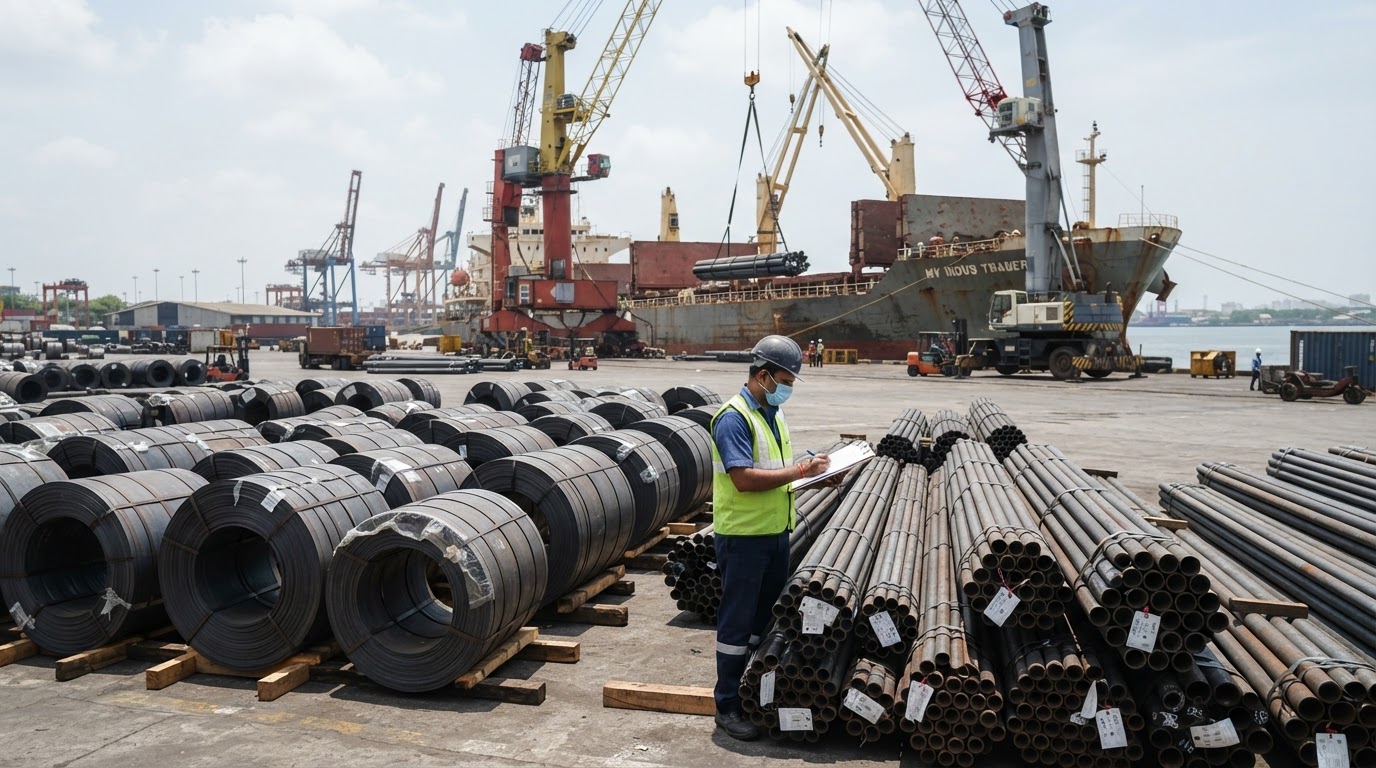
Steel is one of India’s biggest export categories, from hot-rolled coils and sheets to pipes, wire, fasteners and fabricated structures. Buyers and customs authorities ask for more paperwork for steel than for most goods, because grade, origin and, increasingly, carbon emissions all matter. Here is what you need.
1. Before you ship: registrations
- IEC from the DGFT, updated every April–June. See our IEC guide.
- AD code registered on ICEGATE, or the shipping bill can’t be filed. See our AD code guide.
- GST registration and LUT, if you export without paying IGST, or a plan to claim the IGST refund.
2. Standard export documents
- Commercial invoice: grade, specification (for example IS, ASTM or EN standard), dimensions, weight, HS code, unit price and Incoterm.
- Packing list: piece count, bundle or coil numbers, net and gross weight per bundle or coil. Steel buyers match these against the mill certificates.
- Shipping bill: filed on ICEGATE by your customs broker, leading to the Let Export Order.
- Bill of lading: steel usually moves by sea, in containers or as break-bulk.
- Insurance certificate: for CIF sales or when the buyer asks.
3. Steel-specific certificates buyers ask for
- Mill test certificate (MTC): issued by the producing mill, showing chemical composition and mechanical properties for each heat or batch. Many buyers ask for an EN 10204 type 3.1 certificate. It also shows where the steel was made.
- Third-party inspection certificate: from an agency such as SGS, BV or TÜV, checking quantity, dimensions, marking and quality before loading, when the buyer or the letter of credit requires it.
- Certificate of origin: non-preferential, or preferential under a trade agreement so the buyer can claim lower duty.
- Packing and marking details: heat numbers, grade and size on each bundle or coil tag, matching the MTC and packing list.
- Fumigation or ISPM-15 certificate for wooden dunnage, crates or pallets used in packing.
4. Exporting steel to the EU: extra steps in 2026
The European Union is where steel paperwork has changed most:
- CBAM (Carbon Border Adjustment Mechanism): CBAM’s definitive phase started on 1 January 2026. EU importers must buy CBAM certificates for the carbon embedded in the steel they import, so they will ask you for verified emissions data for each product. Without your own data, default values apply, which usually means a higher cost for your buyer.
- Quotas: the EU limits steel imports through country and product quotas. Shipments outside the quota can face a large additional duty, so check quota availability with your buyer before shipping.
- Melt-and-pour evidence: from October 2026, the EU expects evidence of where the steel was first melted and poured. The mill test certificate is the main document, supported by supply-chain records.
If you trade or fabricate steel rather than making it, ask your mill for MTCs and emissions data with every purchase. Your EU buyer will need them.
5. Common mistakes that delay steel shipments
- Weights on the invoice, packing list and MTC that don’t match
- Heat numbers on tags that aren’t on the mill certificate
- The wrong HS code, which affects export incentives and the buyer’s import duty
- Letter of credit terms asking for documents the mill can’t issue
How Utsarg Globex helps steel exporters
From Kolkata and Haldia, eastern India’s steel gateways, we check your documents before filing, handle customs clearance, and book ocean freight in containers, open-top or flat-rack, or as break-bulk. For the full list of export documents for any product, see documents required for export from India.
Frequently asked questions
What export documentation is needed for steel products from India?
A commercial invoice, packing list, shipping bill and bill of lading, filed under your IEC and AD code, plus a mill test certificate. Depending on the buyer and destination you may also need a certificate of origin, third-party inspection certificate, insurance certificate and, for the EU, CBAM emissions data and melt-and-pour evidence.
Is a mill test certificate mandatory for export?
Indian Customs doesn’t always require it, but almost every steel buyer does, and EU rules now rely on it to show where the steel was melted and poured. Treat it as essential.
Who provides CBAM emissions data, the exporter or the mill?
The EU importer files the CBAM declaration, but the data comes from the producing mill and is passed on by the exporter. If you are a trader, get it from your mill with each order.
Exporting steel? Send your product, quantity and destination on WhatsApp +91 98301 12236 or through our quote form, and we’ll check your documents and quote freight within 24 hours.